Designing for Data Accuracy and Timely SLA Delivery
Starting from a blank slate, I translated research data into UX insights, partnering with senior stakeholders across a fast-scaling org to launch the company's very first live product.
Details hidden to protect confidentiality
Product Design
Operations
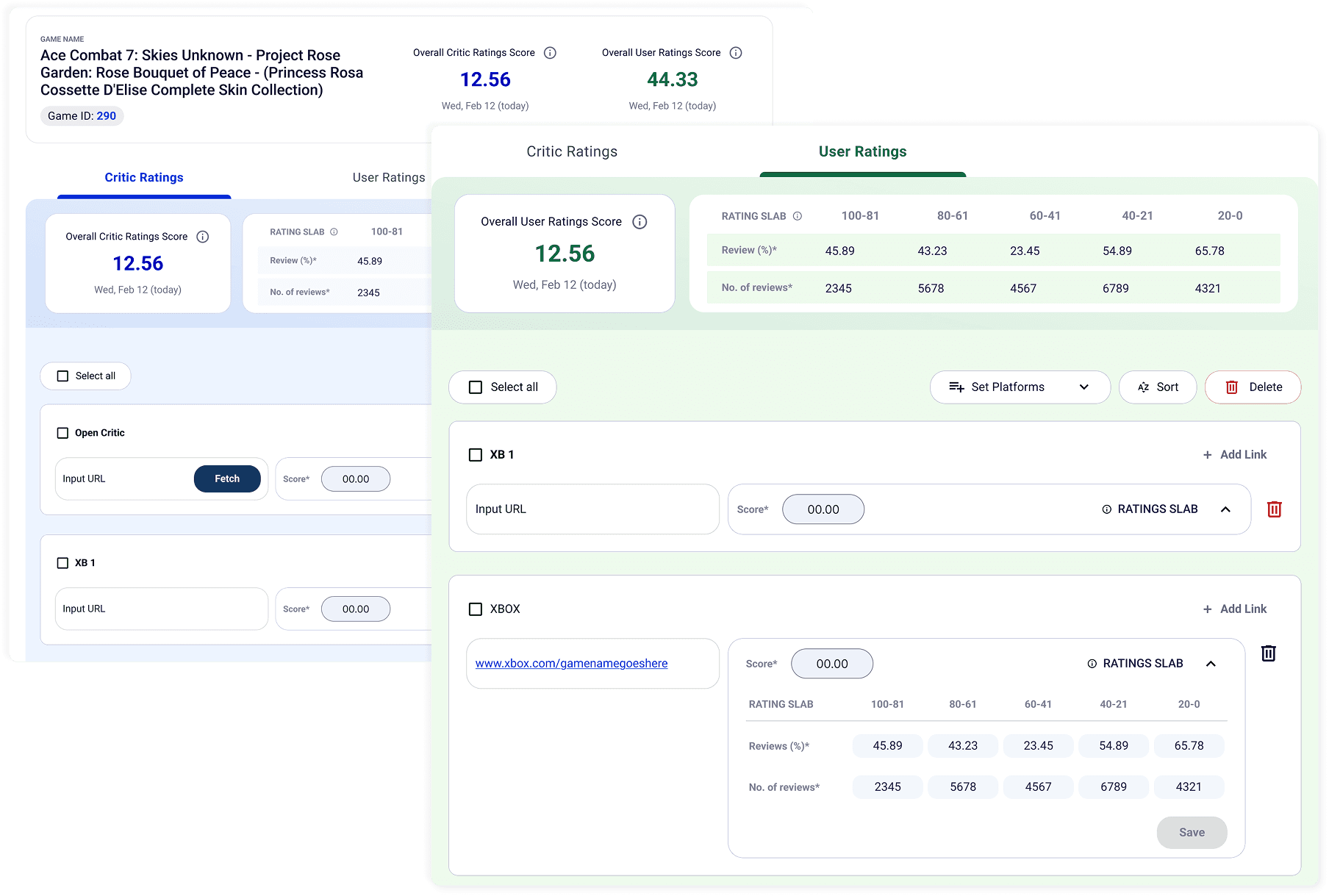
The Product
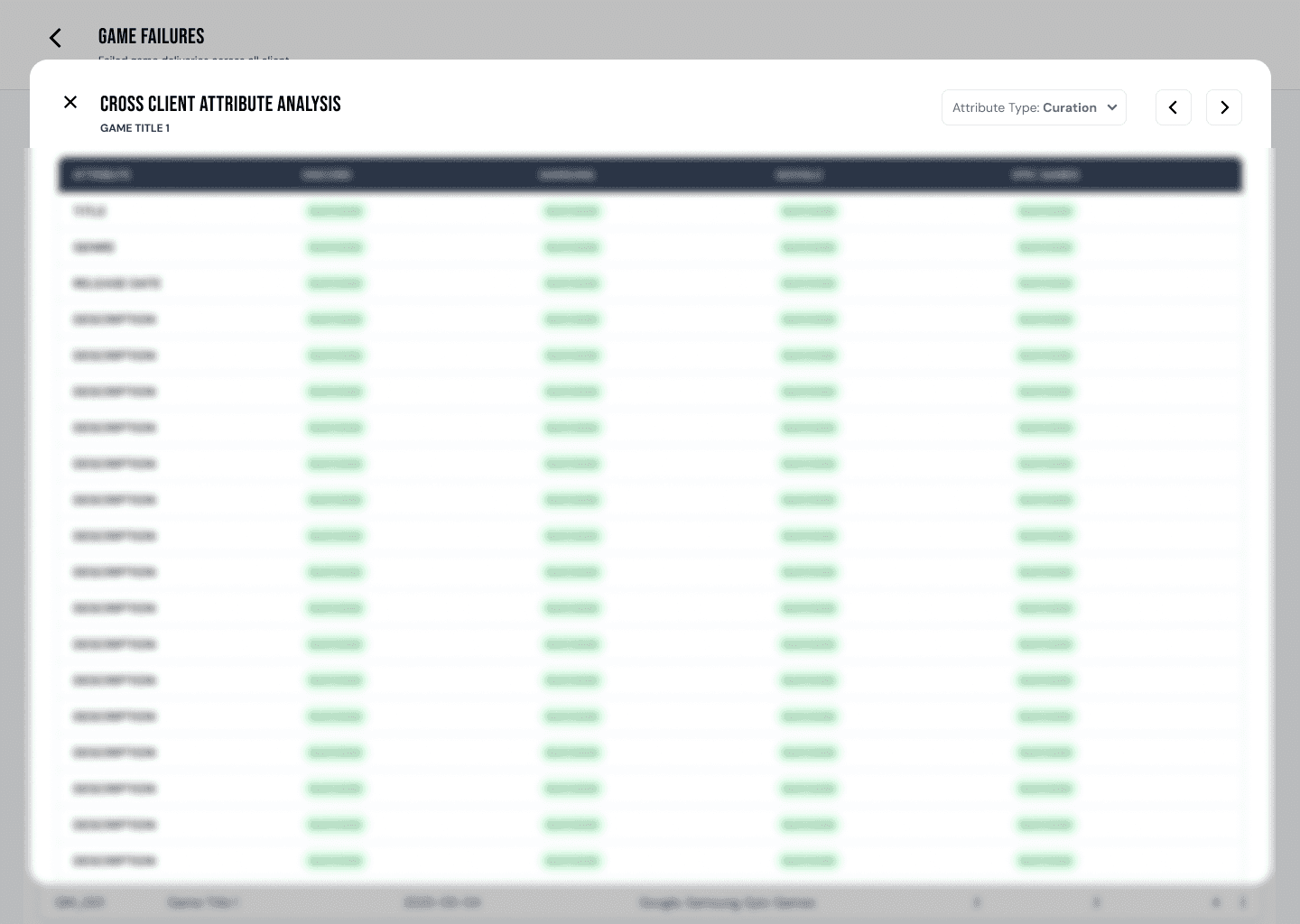
A unified internal system that tracks SLA compliance, streamlines client onboarding and provides visibility of errors thus showing actionable insights for operations, tech, leadership and sales.
The Impact
The platform has driven
metadata delivery to ~90% compliance,
cut tech team involvement in resolving delivery errors by ~85%, and
improved overall data delivery accuracy by ~85%
turning a fragmented, manual process into one the entire organization could trust.
Timeline
Jul 2025 - Sept 2025
Role
UX Design
UX Research
Visual Design
Usability Testing
Team
1 Product manager
1 Design Director
1 Designer
5 Engineers
The shift this platform created:
Before
Errors surfaced weeks after delivery, buried in client complaints.
After
Errors are visible the moment they happen, per client, per game.
Before
SLA agreements lived in scattered Excel sheets.
After
Every contract and SLA is centralized & instantly accessible.
Before
Onboarding a new client meant manual cross-checks across teams.
After
One unified view gets tech, ops, and sales aligned from day one.
Challenges
Key Learning
01
I learned to design with the system and the business in mind, not just the screen.
This project deepened my understanding of how metadata delivery actually works, not as an isolated tool, but as one part of a larger workflow. What I was designing sat at the delivery stage, which meant the input to my platform was the output of someone else's process. Every design decision had to account for what came before it in the pipeline, not just what happened on my screen.
02
I learned that designing for adoption is a different skill than designing for usability.
03
I learned to translate design decisions into business language.
The Impact
~90% compliant metadata delivery eliminating the inconsistencies that used to trigger weeks-long resolution cycles.
~85% reduction in tech team involvement in resolving metadata delivery errors freeing engineering from firefighting issues that didn't need to be theirs.
~85% increase in data delivery accuracy directly improving the quality of what clients received.